
Under the microscope, the whole class watches one stitch
Some knowledge begins with a lecture.
But for that knowledge to become something the hands can actually do, the learner needs time to sit down and practise.
At the Department of Surgery of Hanoi Medical University, a course on basic microsurgery in neurosurgery was held for young doctors.
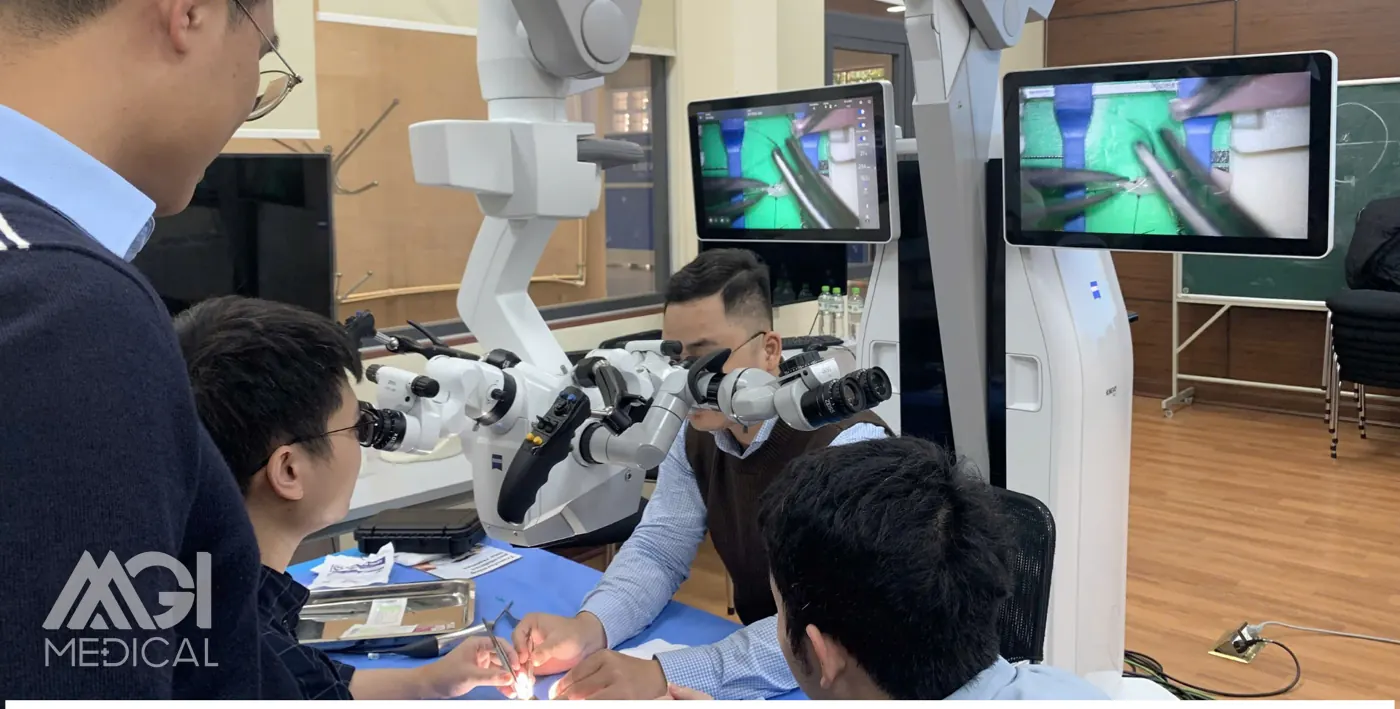
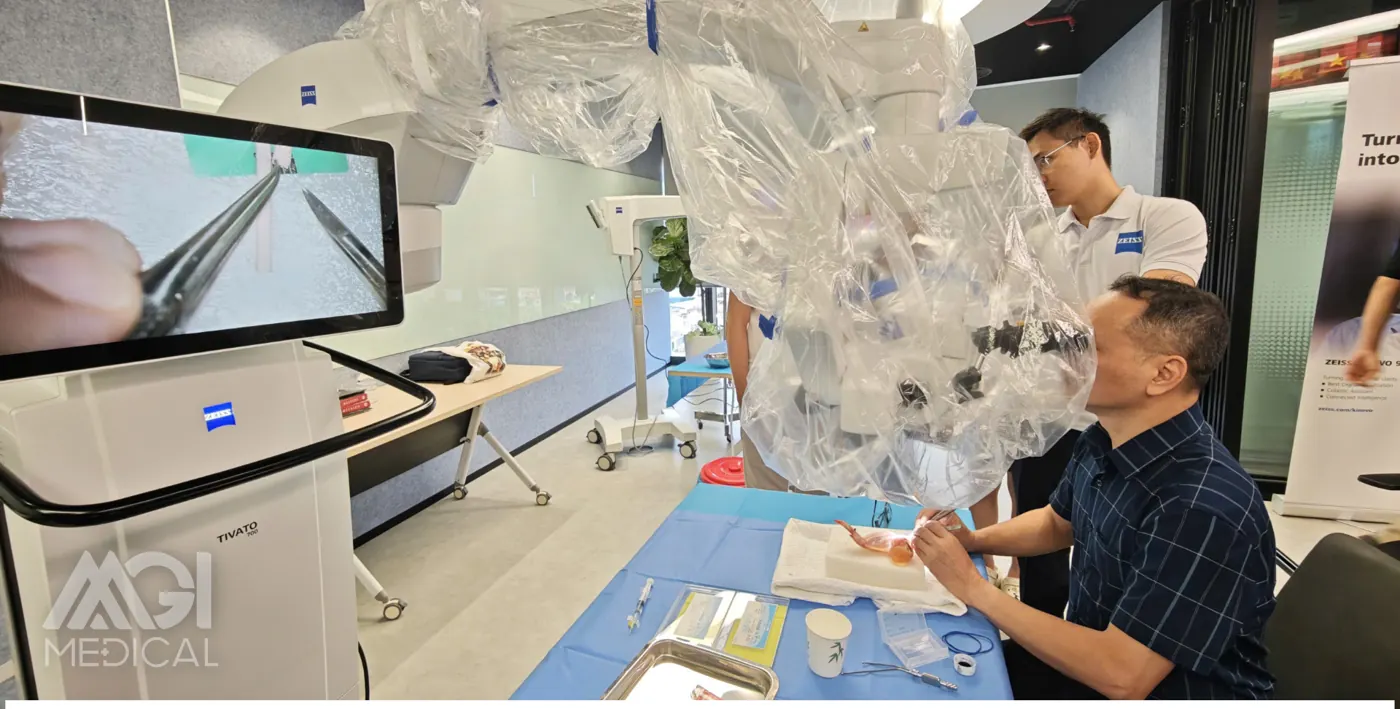
Participants practised suturing under the operating microscope while the image was projected onto a screen for the whole class to follow.
There, the lesson was not only in the lecture. What was happening on the table was part of the teaching too.
Those sitting below could see exactly how a stitch is placed — and see the point where they themselves usually go wrong.
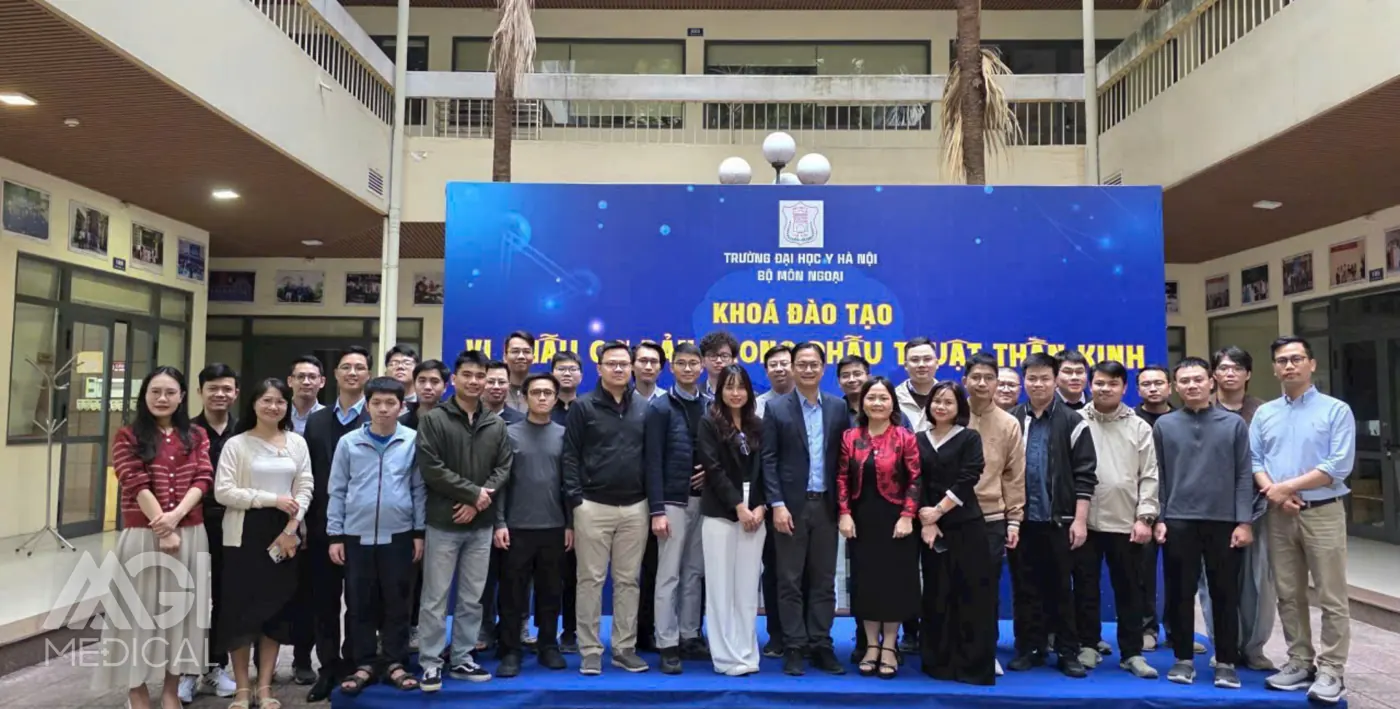
The course closed with a group photograph in front of the department's backdrop.
A photograph keeps only the last moment. Ahead of it are the quiet hours spent under the microscope.
Principles in the morning, chicken wings in the afternoon
At another microsurgery workshop, held at an experimental surgery centre, the day was split in two.
The morning was given to the principles of microsurgery.
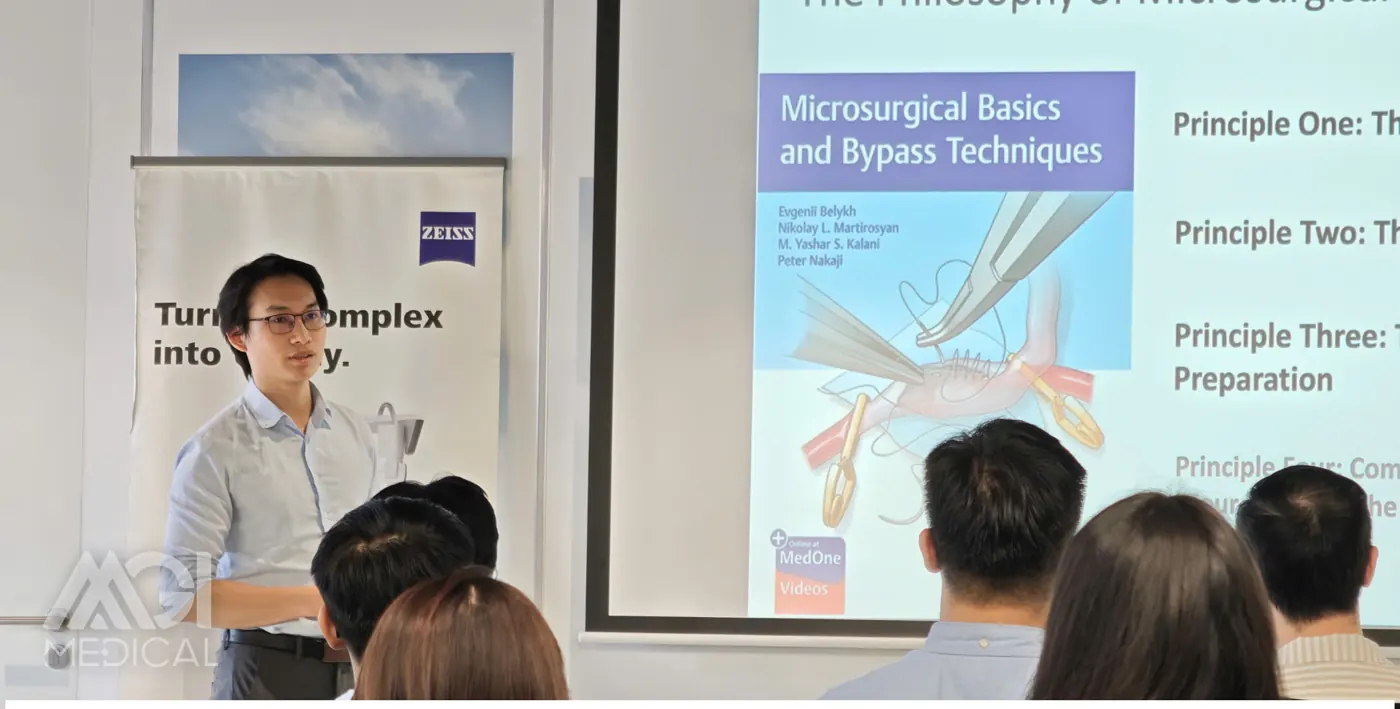
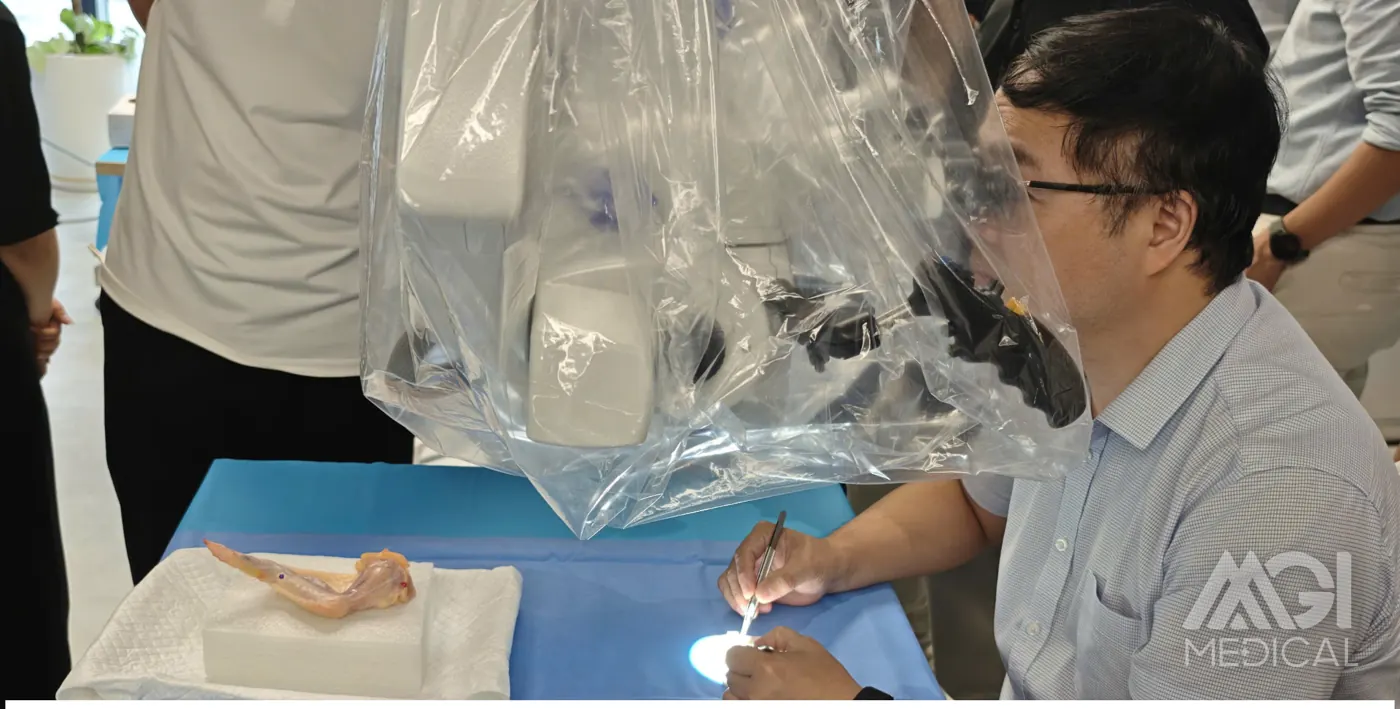
In the afternoon those principles were carried down to the table: participants practised anastomosis on vessel models, then on chicken wings, under the operating microscope.
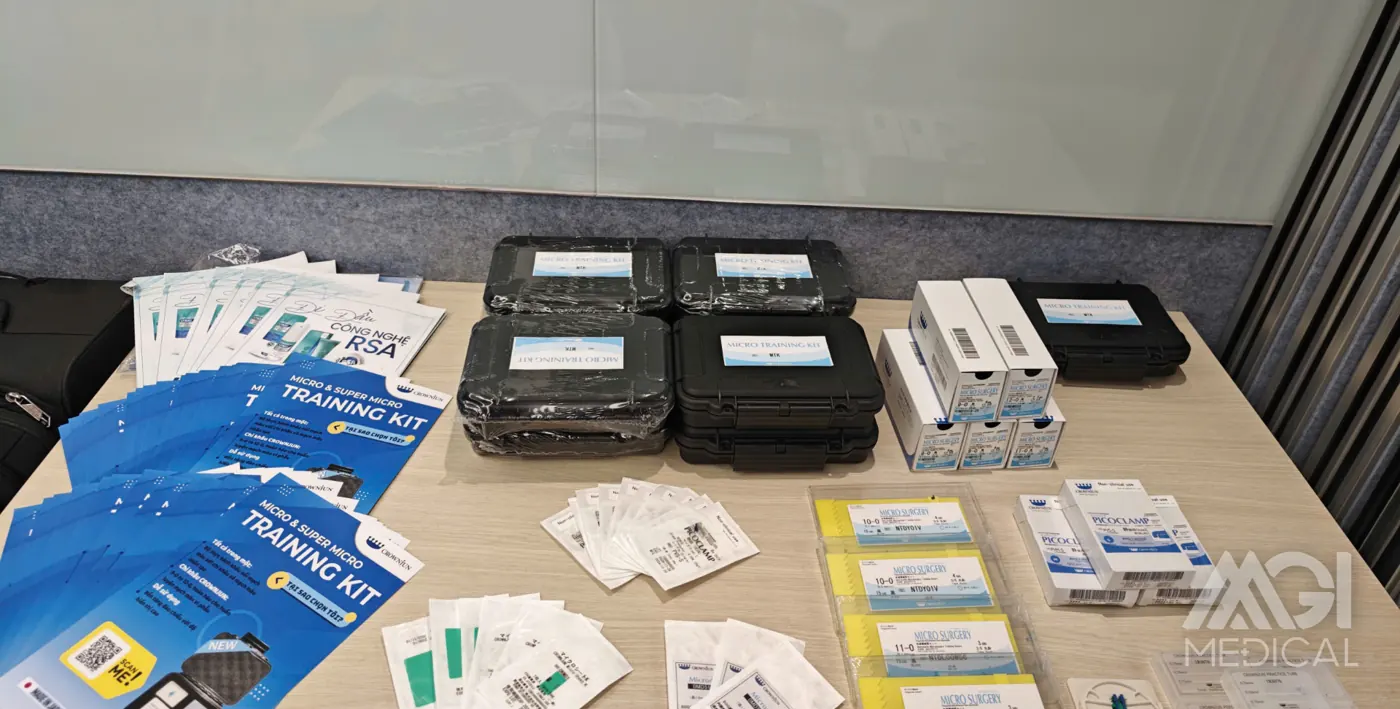
On the table lay the microsurgical training kits, laid out before the session began.
The distance between a concept heard in the morning and a manoeuvre performed in the afternoon is sometimes only a few steps, from the seat to the practice table.
But they are steps nobody can take on your behalf.
A small stand in the conference lobby
Not every time do we stand beside a practice table.
On 22 May 2026, Military Hospital 17 in Da Nang held the orthopaedic trauma CME meeting “Hip replacement: present and future”.
That day MGI Medical had a display stand in the lobby. We did not take part as a sponsor.
On the table were bone graft substitute and a few instrument sets, for doctors to look at and pick up.
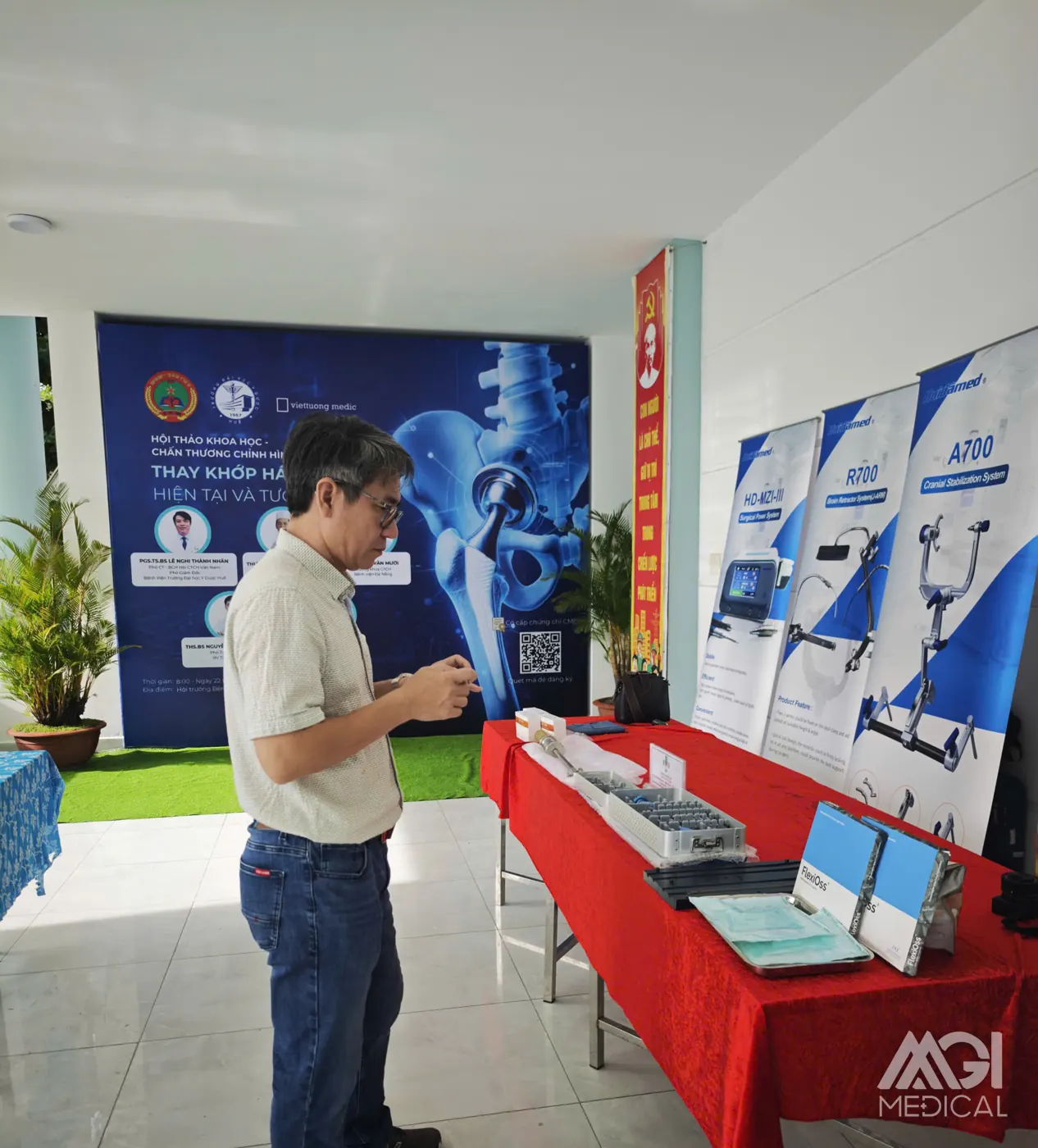
Sometimes the most useful exchange at a meeting does not happen at the podium, but where a surgeon picks up an instrument, turns it over in the hand and asks one very specific question.
Thank you
Every course begins with someone who decides to open it.
We thank Dr Hà, who opened the course and kindly allowed MGI Medical and Crownjun to accompany it.
We also thank Carl Zeiss, who have stood alongside those sessions. The microscope in the middle of the room is what lets a whole class see a single stitch — and gives a lesson a shared image to talk about.
A dream called training
We have a dream, and we will say it plainly.
We wish training were treated as part of the profession, not as an event that happens a few times a year.
We wish a young doctor in a distant province who wants to practise suturing a small vessel only had to sign up, instead of waiting for a journey.
We wish every course did not stop at the group photograph, but had a place where participants could come back and keep practising, until the hands know the movement.
We wish every region had a practice room: a microscope, a table, someone to guide, and time.
We know a device company cannot do this alone.
But we know our own place: set up the practice table, prepare what a session needs, then step back.
In front of the table stand the teacher and the learner. That place belongs to them.
References
- Thư mời và chương trình Hội thảo khoa học Chấn thương chỉnh hình – CME “Thay khớp háng: hiện tại và tương lai”, Bệnh viện Quân Y 17, 22/5/2026. benhvienquany17.com/
- Ảnh trong bài do MGI Medical chụp tại các khoá đào tạo, workshop và hội thảo nêu trên.